Travel Trends
Snow-Sure & Crowd-Free: Small Ski Resorts for 2026
July 12, 2026 · VayCando · 4min read
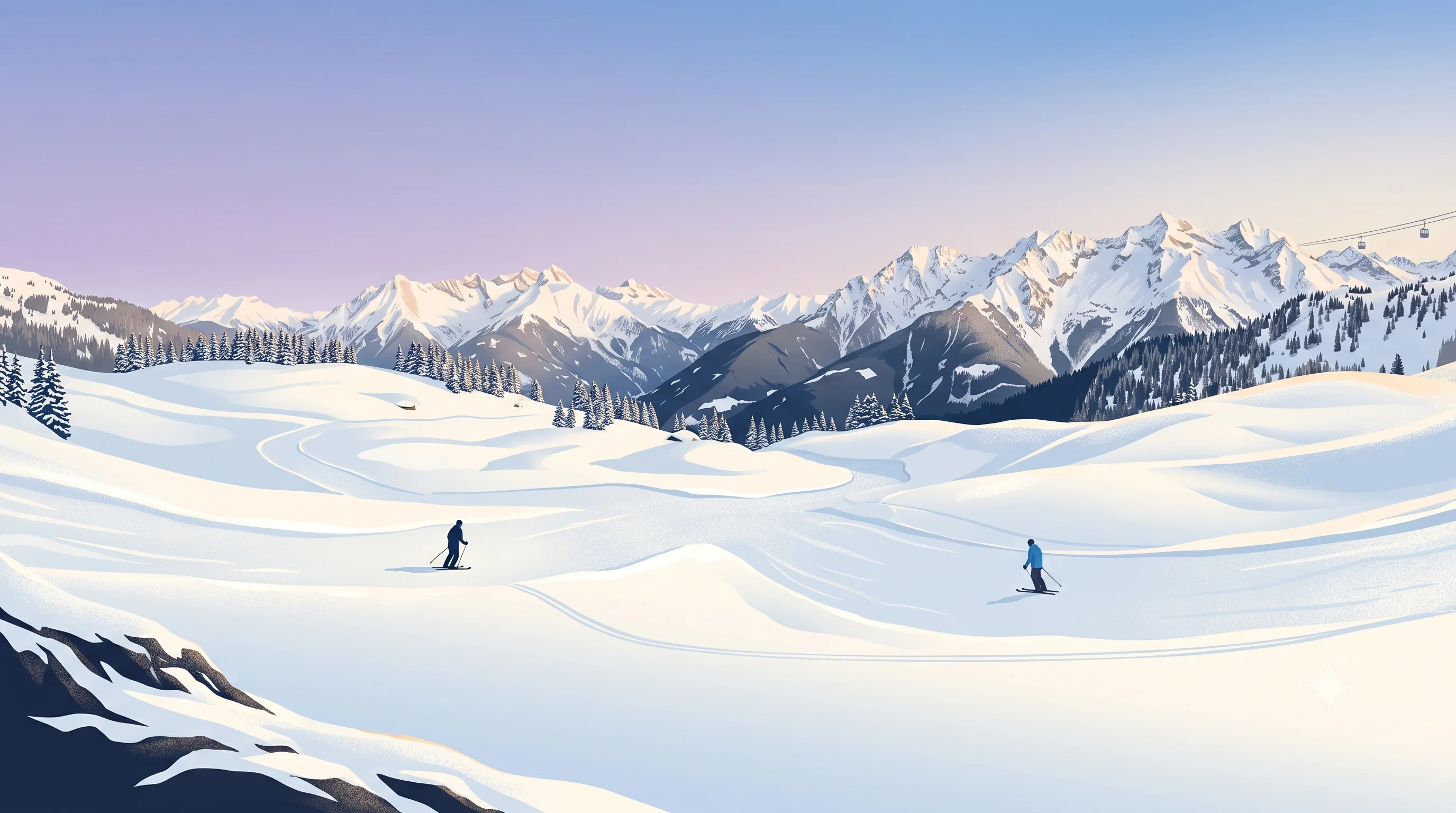
Know the feeling of spending more of your ski holiday in the lift queue than on the piste? The big Alpine names are as crowded as they are expensive – and with every mild winter, less certain when it comes to snow. That is exactly why the small, high-altitude resorts are worth a look: fewer crowds, more reliable snow and often a calmer, more honest way to enjoy winter. For sustainability-minded skiers from Central Europe, it isn’t a step down but frequently the better experience.
A quick word on accuracy: The altitude and snow figures in this article are rough guides, not guarantees. Snow reliability depends heavily on altitude, weather and the particular winter, and cannot be predicted – check the current snow and piste reports before booking. Lift and rail connections also change seasonally; the last few kilometres into the ski village often run only by bus. Only book after a live check of timetables and opening dates.
Why small and high makes sense right now
Two trends are converging. First, the well-known mega-resorts feel the crush ever more clearly – packed lifts, pricey beds, little peace. Second, climate change is turning snow reliability into a question of altitude: lower pistes increasingly rely on artificial snow, while high-lying places hold natural snow for longer.
Small, high-altitude resorts combine both: they often sit above 1,800 or 2,000 metres and stay comparatively snow-sure, yet draw fewer crowds than the big brands. If you can do without the après-ski bustle and endless kilometres of piste, you get calm, shorter distances and a cosier atmosphere in return.
Five calm alternatives, thought through by altitude
We sort them not by size but by what matters for a relaxed winter: altitude, quiet, and whether you can get there without your own car.
Kühtai (Tyrol)
At around 2,020 metres, Kühtai is one of Austria’s highest ski villages – and correspondingly snow-sure, often into late March. The area is compact and family-friendly rather than gigantic. You can travel comfortably by rail to Innsbruck, from where a bus climbs up in a good hour. The honest catch: for kilometre-chasers Kühtai is too small, and the high altitude means wind and cold days.
Obergurgl-Hochgurgl (Ötztal)
Sitting between 1,793 and 3,082 metres, Obergurgl-Hochgurgl offers a long season from mid-November into May – and markedly more calm than its lively neighbour Sölden. If you want snow reliability and a more settled atmosphere, this is the place. By rail you reach Ötztal station and continue by bus; there is no getting around that final leg.
Gargellen in the Montafon (Vorarlberg)
Gargellen at 1,423 metres is the smallest and quietest village in the Montafon – a genuine insider tip for anyone who puts snow and stillness above piste kilometres. Lower than the Tyrolean high villages, but snowy and sheltered from wind. The train takes you to Bludenz, followed by the onward trip up the valley.
Andermatt-Sedrun-Disentis (Switzerland)
Switzerland offers the most relaxed rail approach: Andermatt and the connected areas up to Disentis sit right on the Matterhorn Gotthard Railway – you practically step off the train at the lift. The area has grown in recent years but stays snow-sure and, outside the peak holiday weeks, pleasantly empty. For slow travellers, it is the most honest compromise between snow, size and car-free access.
Vals or Brandnertal – a size smaller again
If you want it even quieter, small areas like Vals (Graubünden) or the Brandnertal (Vorarlberg) offer manageable pistes almost without crowds. This isn’t about clocking up kilometres but about a few relaxed descents, winter walking and calm – ideal for families and returning skiers.
In our view: the trade-off
Here too there is an honest trade-off. The most snow-sure places lie high – and high often means a smaller area, more exposure to the weather and, not rarely, a bus for the final stretch. The places most easily reached by rail, such as Andermatt, are in turn a bit larger and not deserted during the holidays.
For most travellers from Central Europe, that is the decisive question. Anyone after piste kilometres and après-ski won’t be happy in small high-altitude resorts. But if you want reliable snow, calm and the most car-free journey possible, a small, high-lying village is almost always the better call – more relaxed, cheaper and more honest ecologically.
In short
Snow-sure and crowd-free are not mutually exclusive if you think small and high. The finest version combines three things: an altitude that holds the snow, an area quiet enough for real rest, and a journey that works by rail as far as possible. Check the current snow reports and timetables for your dates – and plan the journey in as the first calm part of the winter holiday.